The Bible describes many miraculous events. People with a background in modern science naturally have questions and sometimes doubts about miracles. I also did when I was a young Christian. As a physics major in college, who had just become a Christian, I had trouble believing in miracles. The Exodus of the Hebrews (or Israelites) out of Egypt is a dramatic account of great events that shaped the heritage of the Jewish people. It also has important lessons about what the God of the Bible is like. I accept the Biblical accounts about Moses, the Exodus from Egypt, and the Israelite conquest of Canaan. Today this entire story is doubted completely by many scholars. In today’s way of thinking, there is often a desire to make the Biblical stories “more palatable” or easier to understand in terms of science. We need to be careful about trying to explain miraculous events with science. There is a danger we may misinterpret or confuse the message of Scripture by bringing in science when it may not be appropriate. I think science can have relevance to understanding what the Bible describes about nature sometimes, but science cannot tell us how to interpret Scripture. Scripture always has more authority and certainty than science.
Colin Humphreys is a Cambridge University Professor who has written a book in which he tries to explain the Biblical events of the Exodus in terms of science. He published a book in 2011 called “The Mystery of the Last Supper,” which I think is quite good. My article on the date of the crucifixion is largely based on that book. Since I liked that book, I decided to read his other book on the Exodus. It is entitled, “The Miracles of Exodus,” published in 2003. I read the Kindle eBook.
There is a lot in Humphrey’s book and I will only explain his ideas in a brief way. This is somewhat unfair because he does put significant research and time into the book, obviously. I can accept the God of the Bible doing miracles because of who the God of the Bible is. If He created the universe from nothing, why should we have a problem in principle with miracles? Science cannot disprove some event in the past that the Bible presents as a miracle. God is the author of physical laws that we study in science and so God can bypass or supercede natural laws to do a miracle, if that is his purpose. So on one hand it is important not to doubt that God can do miracles, but on the other hand, it is also true that Christians can misunderstand miracles or not consider natural phenomena that may have been involved in what happened. There is always a risk that in trying to figure out what happened we will make a mistake because we simply weren’t there in the past.
In a book called The Biblical Basis for Modern Science the late Henry Morris distinguished between what he called Grade A miracles and Grade B miracles. A Grade A miracle is something that could never happen by natural laws. A Grade B miracle is something that happens by natural processes, but the miracle is in the timing or the situation in which it happens. The Bible has examples of both these types of miracles. God can use either type for his purpose. It may not particularly matter much whether a miracle in the Bible is a Grade A miracle or a Grade B miracle, but the important thing in understanding the Bible is to be true to what it says. Some things about the Exodus have generally been understood as Grade A miracles, such as the crossing of the Red Sea. Humphrey’s treats it more as a Grade B miracle, caused by a powerful storm that happened just at the right time and at the right place where the Israelites needed it to happen. I think sometimes Humphrey’s errs too far on the side of “reducing the miracle” you might say. But if you reduce a miracle in the Bible from the way it is described in the text, it tends to not make sense of the story any more. This is sometimes a problem for Humphreys, but there are some worthwhile points he makes as well.
Here’s some of Humphreys ideas on the Exodus events:
1) Humphreys uses a date of the Exodus of 1326 B.C. The date of the Exodus is a controversial thing in the academic world but I think this date is clearly wrong. There is evidence of the Israelites in Egypt and later of them in Canaan. There is good evidence that dates the fall of the city of Jericho, the first city conquered by the Israelites also. So the evidence is that the Exodus was at about 1400 B.C. Humphreys approach to dating the Exodus is a major weakness of the book but much of the rest of the book does not really stand or fall too much on the date. So I would not throw out everything else in the book solely because of the date problem.
2) Humphreys tries to explain the plagues of Egypt with science. Overall I don’t think this is plausible. However, there are some aspects that seem plausible. He tries to develop an approach that says once the first plague happens, that sets off a chain of natural causes that leads to what follows. I don’t think it all works, but some of it may. One of the important things to note here is that the Egyptian people were thoroughly convinced that the plagues were well beyond anything they had ever experienced and that they were miraculously caused by the God of the Hebrews. The Egyptians had seen some somewhat similar events on lesser scales. They knew the difference between the usual seasonal changes and other occasional events, and something miraculous. How do we know this about the Egyptians? Because they willingly gave the Jews so many valuables and supplies upon leaving. They were happy for the Jews to go, though Pharaoh certainly wasn’t.
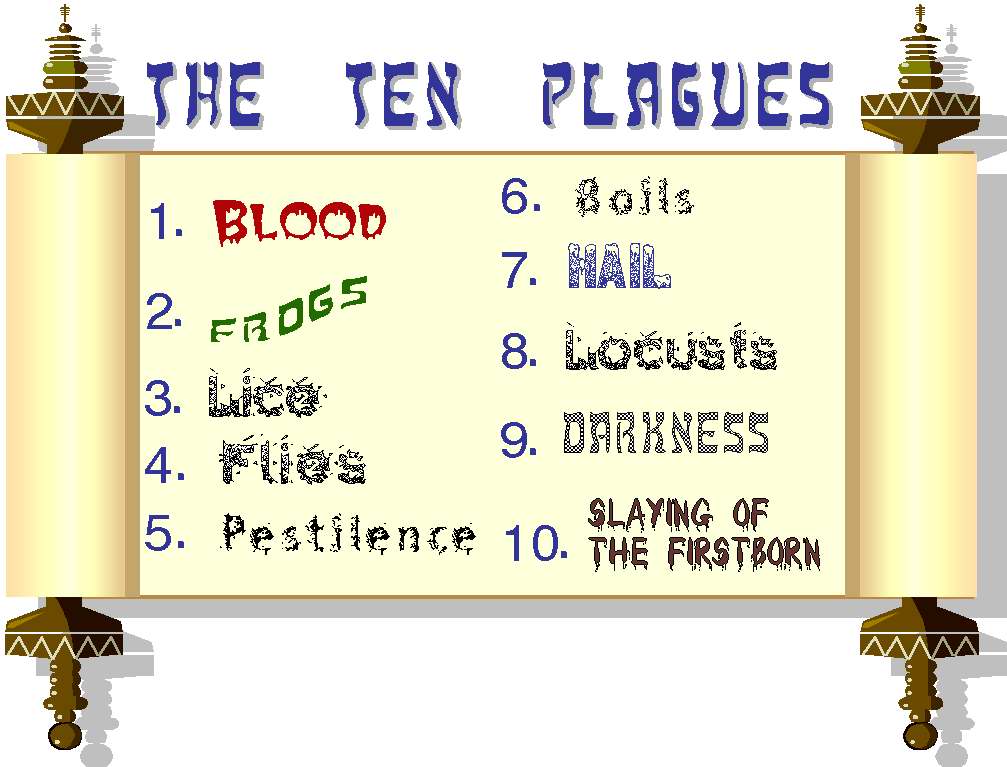
I think his explanation of the first plague is very unrealistic. Humphreys argues that there was an algal bloom at the mouth of the Nile. It is true that there is a kind of algae that is red and is toxic to fish. This is known to happen in various places around the world. It tends to happen in an area where there is salty sea water mixing with fresh water. An algal bloom can make the water look red. But the Exodus account (Ex. 7:14-25) of the first plague says there was blood in place of water all over Egypt, including in jars! To believe that a natural process could explain this you have to ignore details of what the Bible says, or take it as a sort of embellished account that doesn’t really mean what it says. But it is not enough to propose something similar to what the Bible describes. You have to be true to Scripture & interpret it carefully. An algal bloom would not be likely to affect all Egyptians all over Egypt and it would not be found in containers. An algal bloom would have had to work its way upstream against the current also, so certainly it would not affect all of Egypt. Humphreys presents it as essentially a somewhat more intense version of things that occasionally happened seasonally. I don’t buy this
On the other hand, there may be some validity to the reasoning Humphreys uses to argue that one plague could set off effects that are like the next plague. At least maybe in some cases. As an example, Humphreys has an explanation for the Third & Fourth plagues that may be possible. The fish had died, and then there were all the frogs that died. This could naturally lead to many insects. Humphreys also identifies two species of insect that could be the gnats and flies mentioned in Exodus. These are species known to exist in or near Egypt. So this may be possible, but I don’t know if the intensity of the Third and Fourth plagues are explained by this or not.
3) Humphreys suggests the number of people leaving Egypt was less than what has generally been believed by Christians. He estimates the total number of Israelites leaving Egypt as about 20,000. He suggests this includes something over 5,000 men. This is a controversy about interpreting numbers in the Hebrew. I cannot really speak to the Hebrew. It has to do with interpreting an eleph in the Hebrew. This represents a number and Bible translators have normally taken it to represent a number of one thousand. Humphreys argues it could represent a smaller group of soldiers, which he suggests to be 10 or 20. This drastically reduces the number of people. Why do this? Because several things are “easier to explain” this way. The people need less food and water, they need less space when they camp, etc. Humphreys is not the only scholar to suggest this, but the total number of men in common English Bibles in Numbers 1:46 is always 603,550. This is the men of age that could fight in the army, in a census taken after the Israelites made it to Canaan. This would imply possibly 2 million people, or even more considering family sizes. I will not argue this point too much because I’m told it is difficult to interpret numbers in the Hebrew. But, one problem with Humphreys line of thinking here is to look at Numbers 3:43. This verse indicates there were 22,273 firstborn males in Israel. This seems impossible to reconcile with Humphreys argument, particularly because it’s not talking about the army in 3:43. (There is a good discussion of this issue in the Archeological Study Bible in Numbers chapter 1 that I’d recommend.) At any rate the number of Israelites really does make a difference in understanding various details. I think we have to come back to God doing many miracles to get the Israelites through the desert and into Canaan.
4) Humphreys suggests possibilities that he says could explain the burning bush on Mt. Sinai. He takes the view that Mt. Sinai was an active volcano. He suggests that it’s possible there was a vent of natural gas out of a fissure near a bush. If the gas started burning and it was near the bush but not right under it, it’s possible the bush might look like it was burning when it wasn’t. It is possible a fissure at a volcano could emit gas that could catch fire. Such things have been observed. Humphreys however doesn’t seem to address in the book what happened when Moses got there to see the bush. If it were a gas vent, maybe Moses would have simply said “Oh is that all” and left! This seems too contrived to me, but the important question to me here is what does Humphreys think about Moses meeting with God at the bush? That was no gas vent.
5) Humphreys departs from a common “traditional view” from many scholars that says Mt. Sinai was a mountain called Jebel Musa in the Sinai Peninsula (West of the Gulf of Aqaba). Instead he puts it at a mountain in Arabia called Hala-l-Bedr, or just Mt. Bedr. Mt. Bedr is Southeast of the Southern end of Aqaba. He also believes Sinai (or Mt. Horeb) was an active volcano. I agree with Humphreys that most Bible maps are wrong to show Mt. Sinai on the Sinai Peninsula. I agree it must be in Arabia. But there are at least a couple of possible locations there as well. So I think Humphreys could be correct about Mt. Sinai but I don’t consider it certain. I won’t go into all that’s involved with this question. There’s a lot of geographical, Biblical, and historical detective work involved. This is one of the stronger aspects of Humphreys book I’d say, though going through all the geographical details is a bit tedious. Regarding Mt. Sinai being a volcano. I don’t think this is certain but it is certainly possible. The description of the mountain when Moses went up to meet with God sure sounds like a description of a volcano. But that doesn’t mean it has to be so. Humphreys uses geological data to narrow down to Mt. Bedr because it is known to be an active volcano.
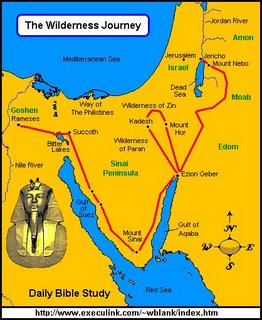
Humphreys also suggests that the volcanically active Mt. Sinai was actually the pillar of cloud and pillar of fire seen by the Israelites. It was a clear landmark and the heat from a volcano can sometimes make a light at night. Since it was visible over the course of their trip it was what guided them. However, this cannot explain everything about how the pillar of cloud and pillar of fire guided the Hebrews. In Exodus 33:16 Moses describes God going with them in their travels. This included the Pillar of cloud traveling with the Hebrews because Numbers 14:14 says that the gentile people around the Israelites heard of this. The gentile people described it as “your cloud stays over them.” So, it was not the Hebrews moving to the cloud (and fire). It was the cloud moving with the Hebrews, and the gentile people of the area understood what this meant.
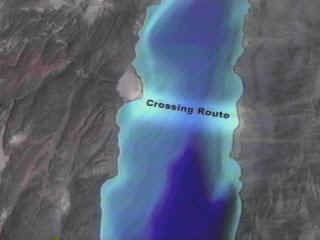
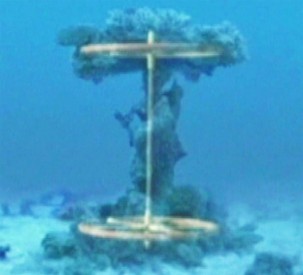
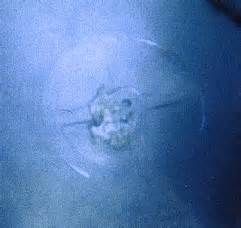
6) Then there is the crossing of the Red Sea. Humphreys explanation of this is very different from the scene from the famous Cecil B. DeMille movie, The Ten Commandments. He proposes that there was a powerful storm with 80-mph hurricane force winds. The winds pushed the waters of the Gulf of Aqaba back and the Jews walked across exposed land. There is a major controversy dealt with in the book a little, about what body of water it was that they crossed. I think Humphreys actually is correct that it was the Gulf of Aqaba. That is a significant story in itself and a controversy among scholars. But I think Humphreys is wrong about the location at Aqaba because of some evidence not in his book. He thinks the crossing point at Aqaba was near the Northern tip, where the water was not too deep. If the water isn’t very deep it won’t take out the Egyptian army. So I think Humphreys scenario would not kill the Egyptians very effectively. Furthermore, Humphreys seems to ignore the fact that it would be pretty hard for thousands of people to cross Aqaba under 80 mph winds. The Exodus description (see Ex. 14:22,29) twice clearly states that there was a “wall of water on their right and on their left.” Humphreys tries to relate his ideas to this but it I’m afraid it just doesn’t cut it. Humphrey’s proposal on the sea crossing just does not fit the Bible’s description of what happened. But he does have some worthwhile discussion of the question of whether the Bible means Red Sea or Reed Sea. He actually found evidence of fresh water reeds near the tip of Aqaba. This means it is possible in the past people might have called Aqaba the Reed Sea. I’m not certain on the Red Sea/Reed Sea question. But I think there is another location along the Gulf of Aqaba where the crossing could have taken place (known as Nuweiba, see below). It is deep water, the sea floor would be smooth to travel on foot, there is a geological structure there that would be convenient for the crossing, and there is evidence of Egyptian chariot wheels having been on the sea floor, from coral formations. This may not be conclusive but it is pretty impressive. There is a video about it from Questar called “The Exodus Revealed.” I think the wind that blew all night was probably mostly for the purpose of drying the sea bottom so the Israelites could walk across it easier.
The crossing of the Red Sea was a great miracle. The fact that science cannot fully explain it is not a problem. Rather it is something that points us to the greatness of God. There were many miracles God did for the ancient Israelites to give them a good land. But because they were ultimately not faithful they eventually lost the land. It all happened as God warned them in advance, and it is a lesson to us to believe God.
Addition from June 2, 2013
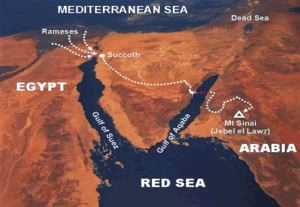
The map above has Mt. Sinai at a mountain called Jebel el Lawz. Humphreys argues for a different site farther South. Jebel el Lawz is not an active volcano, Mt. Bedr, the site according to Colin Humphreys, is an active volcano.
The place I referred to above is roughly in the middle of the gulf of Aqaba. There is a narrow pass through mountains that leads up to a wide beach. This beach marks an underwater “bridge” structure that goes across Aqaba. Aqaba is very deep, several hundred meters at least. But across from this beach it is less deep. It makes a smooth surface on the bottom that could be walked across if the water were not there. Coral formations that are evidence of wheels like Egyptian chariot wheels have been found along the bottom. Corals make right angles and are formed in circular wheel-like shapes. Also one metal wheel part was found along the bottom. Looks very promising for the Exodus crossing site.